



Our Product

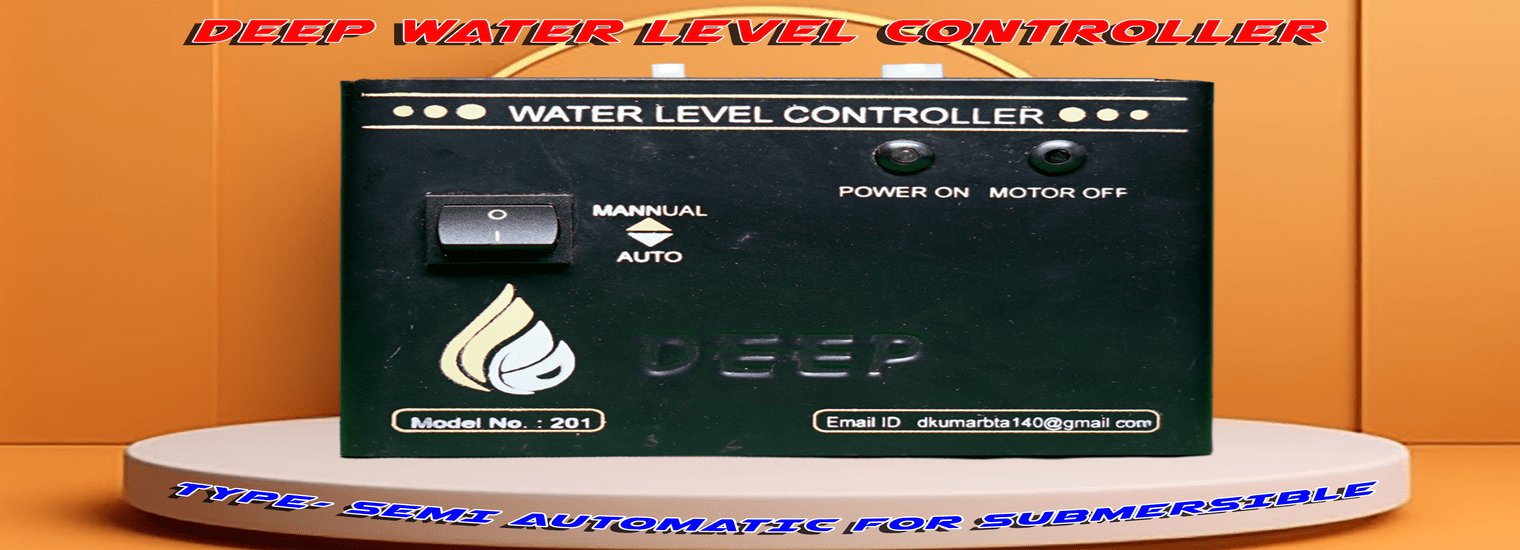
Semi Automatic
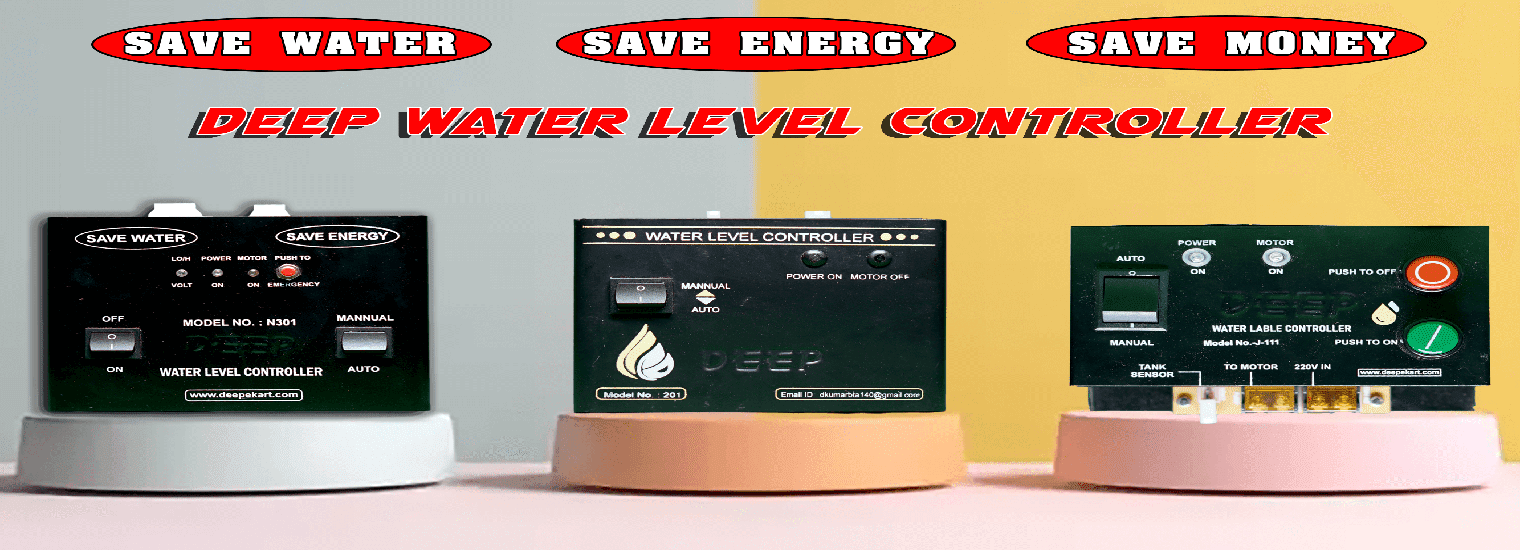
Deep Water Level Controller|Voltage Work: 170/260|Model No: 201

Fully Automatic
Deep Water Level Controller|Voltage Work: 170/260|Model No: 301
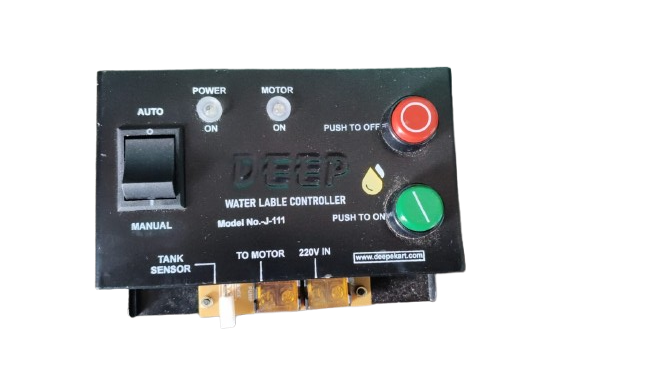
Open Moter
Deep Water Level Controller|Voltage Work: 170/260|Model No: J111
Get A Quate!
Deep Water Level Controller – Best Solution for Efficient Water Management
Water scarcity and inefficient water usage are some of the biggest challenges faced in both residential and industrial areas. In such scenarios, a deep water level controller offers a reliable, automatic, and cost-effective solution. With the rapid advancement in home automation and smart systems, these controllers have become essential tools to save water, energy, and manpower.
What is a Deep Water Level Controller?
A deep water level controller is an automatic electronic device designed to monitor and manage the water levels in overhead tanks, underground reservoirs, borewells, and sumps. It senses the water level and controls the operation of water pumps, eliminating the need for manual monitoring and switching.
These systems are ideal for homes, buildings, farms, industries, and institutions where water tanks are placed at different levels, and human supervision is not always feasible.
Types of Water Level Controllers
There are different types of water level controllers available in the market, based on their working principles and applications:
Automatic Water Level Controller
Manual Water Level Controller
Float Switch-Based Controller
Sensor-Based Water Level Controller
Mobile App Controlled Smart Water Level Controller
A deep water level controller generally falls into the sensor-based and automatic category, as it is designed to work with deep borewells and large overhead tanks.
Working Principle of Deep Water Level Controller
The controller operates on the principle of water conductivity or float mechanism. Sensors or probes are placed at different levels inside the tank. When the water touches a particular sensor level, it sends a signal to the controller.
When the water level goes below the minimum level, the controller turns on the motor. As the tank fills up and reaches the maximum sensor level, the controller automatically switches off the motor. This not only saves water but also prevents motor damage due to dry run or overflow.
Key Features of Deep Water Level Controller
Automatic ON/OFF operation
Suitable for single phase and three phase motors
Protection from dry running
Works with deep borewells up to 500 feet
LED indicators for water level status
Manual override switch for emergencies
Compatible with submersible and centrifugal pumps
Saves electricity and reduces water wastage
No maintenance and long life
Easy installation and operation
Advantages of Using Deep Water Level Controller
Water Conservation: Automatic water level management ensures zero wastage of water.
Motor Protection: Avoids motor damage due to dry running or overload.
Power Saving: No need to run pumps unnecessarily, reducing power bills.
Time Saving: Eliminates the need to manually monitor and switch the motor.
Durable Design: Long-lasting sensors and electronic components ensure hassle-free operation.
Cost-Effective: The one-time investment saves recurring expenses on repairs and water bills.
Applications of Deep Water Level Controller
Residential buildings and housing societies
Apartments and commercial complexes
Schools, colleges, and universities
Hospitals and nursing homes
Factories and industrial plants
Agricultural irrigation systems
Farmhouses and rural water management systems
Hotels, hostels, and restaurants
Why Choose a Deep Water Level Controller Over Manual Operation?
In manual water management, there is a high chance of human error. Water might overflow, or the motor may run dry due to negligence. Moreover, round-the-clock monitoring is not possible.
A deep water level controller automates the entire process and brings consistency, reliability, and efficiency to water usage. It gives peace of mind while ensuring sustainability.
How to Install a Deep Water Level Controller
Installing a deep water level controller requires basic knowledge of electrical wiring. However, most brands provide installation manuals and technical support.
General installation steps:
Fix the controller near your water motor switchboard.
Place the sensors at required water levels inside the tank and borewell.
Connect the pump wires and sensor wires to the controller as per the diagram.
Power on the controller and test its operation.
Many companies also offer installation support during purchase.
Buying Guide – What to Look for in a Water Level Controller
Motor Compatibility: Ensure it supports your motor type (1 HP, 2 HP, 3 Phase, etc.)
Sensor Type: Stainless steel sensors are rust-free and durable.
Depth Capacity: Choose as per borewell depth or tank size.
Power Source: Check if it supports your voltage requirements.
Brand Reputation: Choose from trusted manufacturers with warranty support.
User Interface: Prefer controllers with display indicators or mobile app control.
Maintenance Tips for Long Life
Clean sensors once in 6 months to avoid mineral buildup.
Check wiring for wear or moisture.
Avoid water spillage on the controller box.
Ensure proper grounding to prevent electric shocks.
Test the manual switch once a month.
Popular Keywords Targeted in This Page
Deep water level controller
Automatic water tank controller
Borewell motor controller
Submersible pump controller
Water level controller for 1 HP motor
Water level controller with dry run protection
Smart water level controller for home
Water tank automatic switch
Underground tank water level controller
Water motor automatic control system
Future of Water Management with Automation
As urbanization increases, water management systems need to be smart, efficient, and self-regulating. Deep water level controllers are a step in the right direction. Integration with IoT, mobile apps, and cloud monitoring will be the future.
Already, many smart homes include automatic water level controllers as part of their essential systems. In the next decade, these devices will be as common as inverter batteries and water purifiers in Indian homes.
Conclusion
A deep water level controller is a must-have device for any home or facility where water is sourced from borewells, tanks, or underground reservoirs. It ensures efficient water usage, protects your motor, and reduces dependency on manual efforts. Investing in such automation is not just smart—it’s essential for sustainability.
For long-term cost savings and peace of mind, install a reliable, branded, and feature-rich water level controller today.
